

Cultivating change - how we set sails towards system innovation

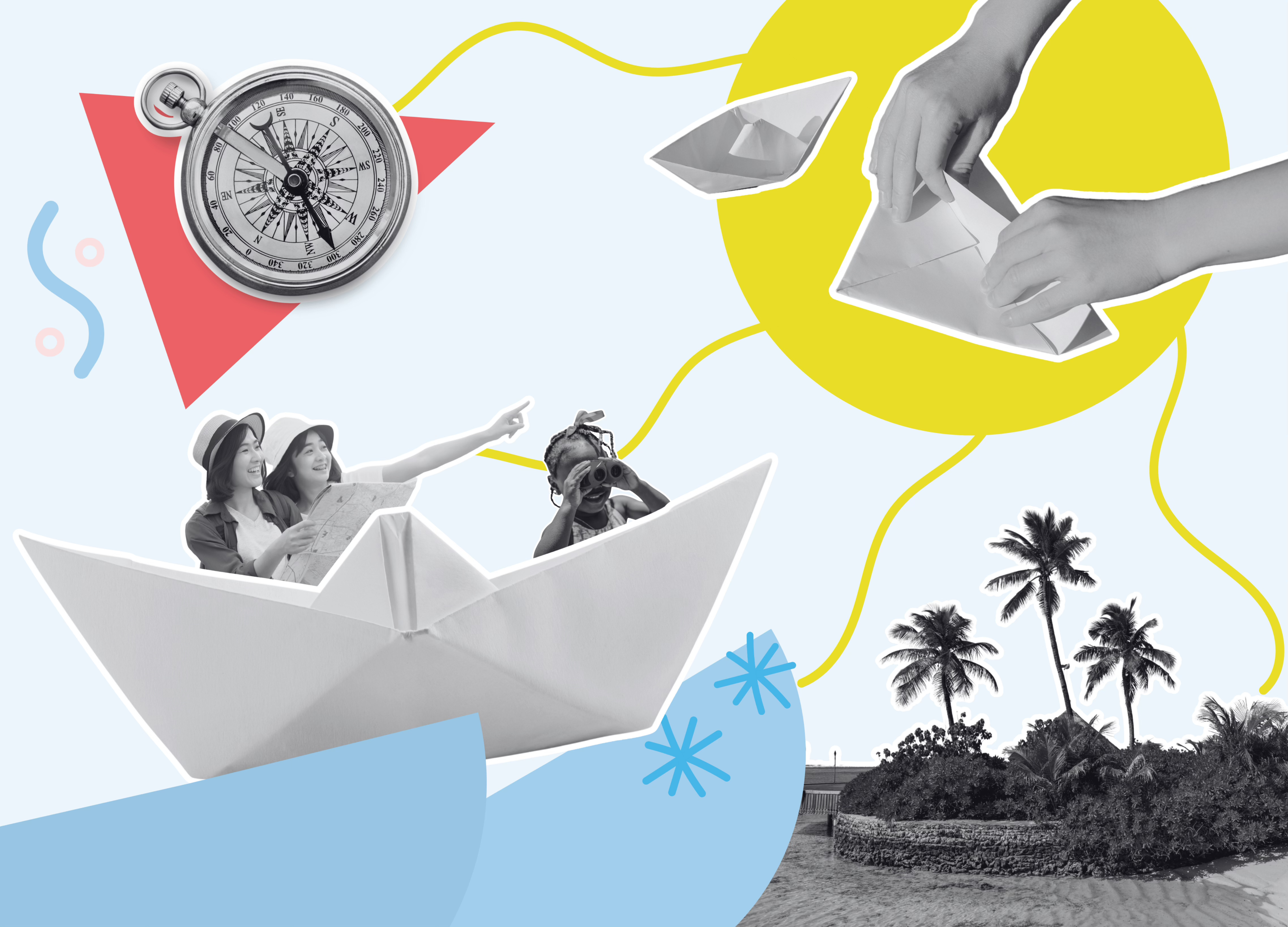
Creating better conditions for solar energy in rural areas in Senegal required just a dozen actors around the table - and a solid process. We know that many opportunities for system innovation are already feasible today. These are the treasure islands we focus on in our work.
We support actors in navigating to these treasure islands. Like any good captain, we assemble the right crew, set the direction, chart the course and adapt as we go. Local and global challenges can serve as the wind in our sails: sometimes difficult to navigate, but when harnessed effectively, a powerful boost that can accelerate us toward our goal.
Four ingredients make the journey a success, and how we design them is what sets our work apart. You will find these elements across all of our case studies, tools and methods:
A good crew: We bring the right players together. Exactly those who are needed - no more, and no less.
A clear objective: Stakeholders share an intention: a joint, “What for?”
Effective navigation: To manage the winds and waves, we can use our tried and tested techniques that leverage both intuition and cognition of our crew.
An experimental approach: We try, learn and adapt. Conditions may change, and we respond.
1. Crew: Getting the right players on board
We want all those who are key to a holistic result - no more, no less. Who is part of the process ultimately defines the outcome. Careful curation is key. Typically, we have formats that convene a broader group of stakeholders, like online consultations, as well as intimate working groups with a select crew, like design workshops. By purposefully managing participation, we make sure all perspectives with a stake in the process are represented, and we create momentum for action.
2. Objective: Setting clear intentions togetherThe crew needs a clear direction for the journey. This is our guiding star, which represents our vision, and our near star, which is where we want to be in 2-5 years. This intention is activated and specified in every step. For each meeting and each activity, there is a clear “why” that is enriched by the intentions of participants. Critically, participants need to own the objective emotionally as well as rationally. Methods like somatic journeys and deep listening allow participants to connect with their own motivation and generate the energy for purposeful collaboration.
3. Navigation: Using intuition and cognitionSailing requires a good understanding of the situation, the map, and the method. It also requires a good sense of the wind, the weather, and the spirit of the team. Likewise, when we design system innovation processes, we make use of all the tools at our disposal, which we’ve gathered over +20 years of experience. While our rational mind can easily get stuck in complexity, our intuitive mind manages it with ease. We use methods like 3D sculptures, constellations or role play to plug into this capacity and model and prototype new systems in a playful way.
4. Experimental approach: Learning and improving adaptivelySystem change goes hand in hand with a lot of uncertainty. We simply don’t know what our desired future will really feel like. Who will win, who will lose? How will it affect our daily lives? In our sailing analogy, the best plan may not work out if conditions change. We need to be able to respond fast to what we learn and change course along the way.
Knowing that we are in an experiment brings lightness. We don’t have to stick to targets and plans and constantly measure success. After all, there are an infinite number of ways to the future we want. It is not so important which one we take, and there will not be a perfect path. The important thing is to make one move after the other, and, above all, to keep going. Today, we too often stop with a map in our hands because we can’t make up our minds. Instead, we like to ask: What do you want to create right now? Regular reflection and reorientation enable the group to digest experiences and to keep up the energy.
In our work, we are standing on the shoulders of giants. We integrate many different approaches and schools, including Theory U and Generative Facilitation, Collective Impact, Design Thinking, System Practice, hypnosystemic communication and many more. We hope to engage thought leaders and practitioners from these fields in this learning process. Who has helped to draw your atlas and shape your methods along the way? We would love to hear about how you navigate the waters in the comments below!